


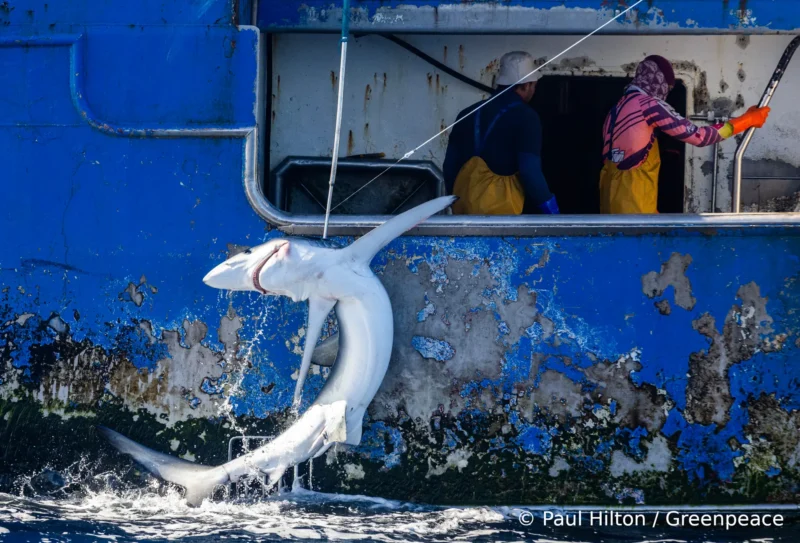
For over 400 million years, sharks have played a crucial role in maintaining ocean ecosystems. While human fear of sharks has transformed into an understanding that they are both essential for marine health and endangered, shark fishing legislation has increased over the past two decades, covering 70% of the world’s oceans. The aim of these laws is to prevent finning and thus reduce shark mortality from commercial fishing.
However, a recent study published in the journal “Science” in 2024 shows that legislation on finning has not been able to reduce shark mortality as hoped. The authors report that shark mortality from fishing increased globally from 76 million to 80 million sharks per year between 2012 and 2019. Nearly 25 million of these sharks belong to endangered species.
Although regulations against finning have reduced animal cruelty and waste, they could paradoxically lead to an increase in shark consumption. The requirement to land whole sharks instead of just fins has apparently created new markets for shark meat that did not previously exist.
Impact on Young Sharks and Endangered Species
Alarmingly, fisheries have started catching more small and juvenile sharks. This is partly a response to higher demand for shark meat, but also indicates declining populations of larger sharks. Boris Worm, lead author of the study and research professor at Dalhousie University, stated: “We show that widespread legislation to prevent finning has been successful in combating this wasteful practice, but has not reduced overall mortality. Too many sharks are dying; this is particularly concerning for endangered species such as hammerheads.”
Jess Rattle, Head of Investigations at the Blue Marine Foundation, emphasized the need for urgent action: “This important work underscores the fact that shark fishing regulations have been insufficient over the past decade. National governments and and RFMOs must act quickly to implement meaningful protective measures through more comprehensive bans on shark fishing and marine protected areas, so that these critical species are given the opportunity to recover from unsustainably high fishing pressure.”
Organizations like the Turtle Island Restoration Network continue to advocate for shark protection by focusing on the preservation and expansion of marine protected areas. Currently, the organization is calling for action as NOAA Fisheries is considering a dangerous rollback of protections in the Atlantic, following pressure from fishing interests claiming an “overpopulation” of sharks.