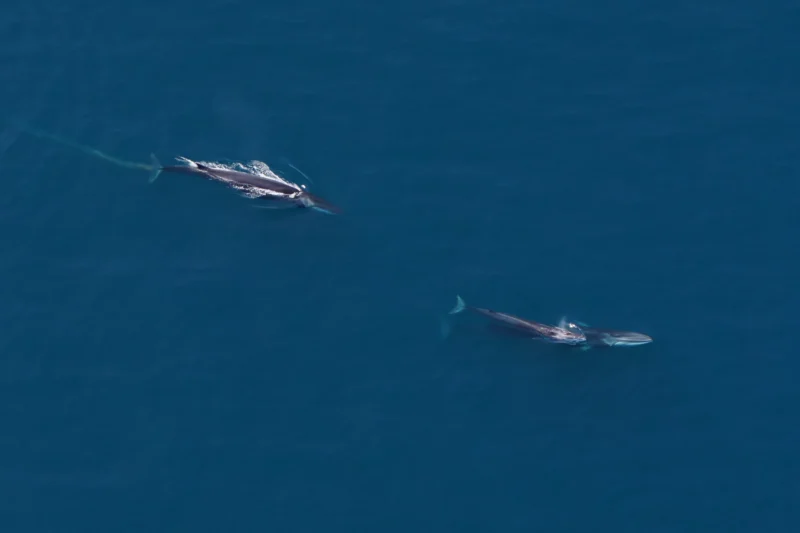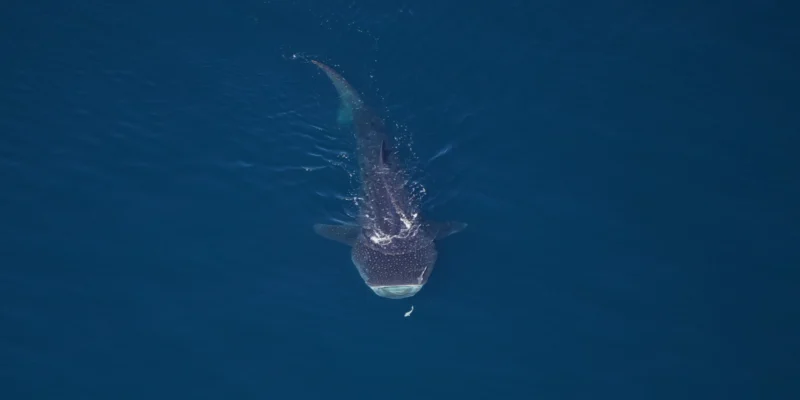
During a research flight over the Northeast Canyons and Seamounts Marine National Monument in the Atlantic Ocean, observers from the New England Aquarium documented more than 2,000 marine animals on August 16, 2026. According to the announcement from the aquarium, these included eleven whale sharks.
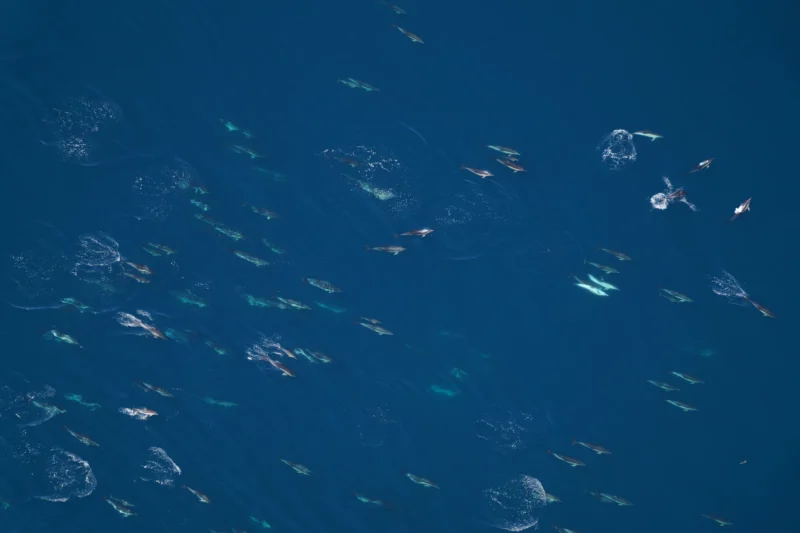
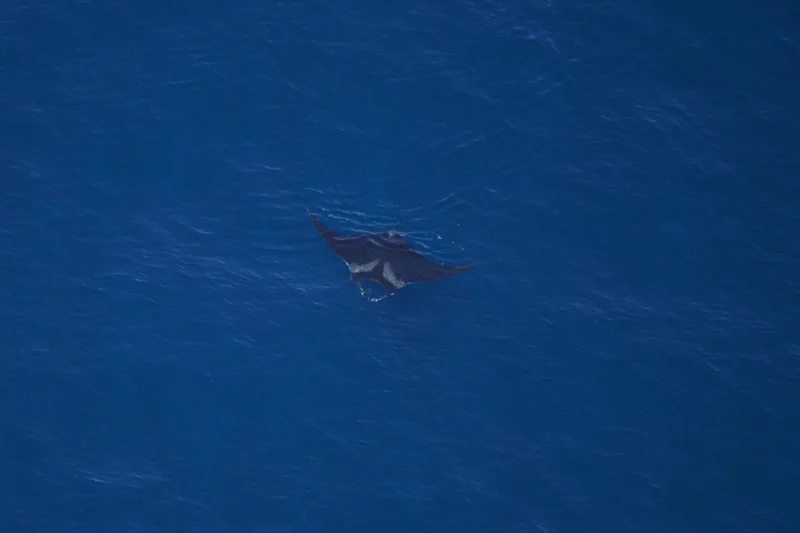
The team recorded 15 species. Around 1,800 of the animals observed were dolphins from four species. In addition, there was a sperm whale, a humpback whale, and an endangered fin whale female with a calf. Besides the whale sharks, the researchers saw manta rays, other devil rays, and hammerhead sharks. They documented an endangered blue whale as well as a small group of fin whales just outside the protected area boundary.
An aerial count is not a population estimate
The number of more than 2,000 animals refers to all sightings during a single research flight. It does not mean that so many animals permanently live in the protected area, and it is not an estimate of the populations there. It can be difficult to determine whether groups were recorded more than once; visibility, weather, flight route, and the duration of the animals’ stay also affect what is detected from the air.
On a previous flight on July 13, 2026, the aquarium had counted nearly 650 animals, including more than 600 dolphins, four sperm whales, 23 pilot whales, and one whale shark. The higher August figure does not indicate a short-term increase in population without standardized comparison. Rather, it shows how much the visible number of animals can fluctuate between individual surveys.
Warm currents meet a productive deep sea
The nearly 13,000 square kilometer area is located about 210 kilometers southeast of Cape Cod. Four underwater mountains and three deep canyons meet the edge of the continental shelf there. According to the research team, whale sharks and manta rays followed the warm waters of the Gulf Stream, while whales found food in productive areas. The observations should therefore not be equated with a gathering directly in front of the swimming beaches of Nantucket or Cape Cod.
A 2022 published long-term analysis supports the ecological importance of the area. It evaluated 189,175 sightings from the years 1979 to 2020 and compared the canyon unit with 500 equally sized areas along the U.S. East Coast. In terms of the number of marine mammal species, the unit ranked among the top 1.8 percent; other diversity measures also placed it in the leading group.
Commercial fishing has been permitted again since 2026
The protected area was designated in 2016. In February 2026, President Donald Trump lifted the general ban on commercial fishing within its boundaries; fishing rules were adjusted in April. According to the overview by NOAA Fisheries, other restrictions still apply. Around 82 percent of the monument area overlaps with a protected area where bottom-contacting fishing gear is largely prohibited. However, pelagic fishing and fishing for highly migratory species are again allowed throughout the monument.
The current research flight does not measure any consequences of this rule change. From the many sightings, it cannot be inferred that the opening has already caused damage, nor that it remains without risk. Rather, the count provides a new snapshot of biodiversity, which future surveys can compare with fishery data and standardized series of survey flights.
For the protection of large migratory animals, it is also essential that they regularly cross the boundaries of the monument. The blue whale and the fin whales outside the area make this spatial boundary visible. Measures in the USA must therefore consider the protected area, adjacent routes, and the activities permitted there together.