
1. Fakarava (South Pass, French Polynesia)
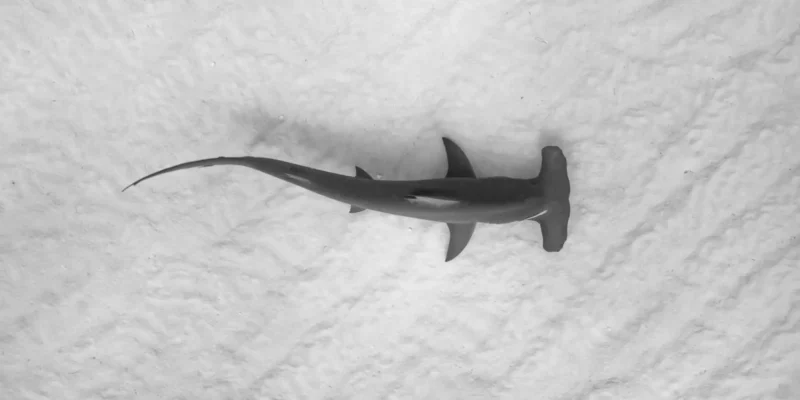
Fakarava is a remote atoll of the Tuamotu Archipelago in French Polynesia and a UNESCO Biosphere Reserve. At the famous “South Pass,” strong ocean currents bring many pelagic predators, making it a spectacular shark diving spot. Divers at this drift site need plenty of experience and composure to use the current’s lift like the grey reef sharks themselves. The location is particularly suited for experienced divers undertaking multi-day liveaboard trips.
In Fakarava’s South Pass, large schools of grey reef sharks (Carcharhinus amblyrhynchos) can be observed regularly. Alongside these dominant animals, whitetip reef sharks (Triaenodon obesus), blacktip reef sharks (Carcharhinus melanopterus), lemon sharks (Negaprion brevirostris), and occasionally tiger sharks (Galeocerdo cuvier) and great hammerheads (Sphyrna mokarran) populate the pass area. During the day, the grey reef sharks “sort” themselves along the current like an endless conveyor belt, carrying them forward with little energy expenditure. Sharks have been strictly protected in Fakarava since 2006, which is why very healthy populations can be found here today.
Visibility is often exceptionally good, and Fakarava is generally suitable for diving year-round. The best weather conditions typically occur during the calmer dry season (April to November). Nevertheless, grey reef sharks and many other species can be experienced throughout the year. Water temperatures usually range between a pleasant 25–28°C, so even beginners can enjoy impressive shark encounters with the right preparation.
2. Tiger Beach (West End, Grand Bahama, Bahamas)
Tiger Beach off Grand Bahama is a shallow sandy bottom (about 10–15 m deep) with unusually clear water and very calm conditions. It is considered the world’s most famous place to dive directly with tiger sharks without a cage. Divers, from enthusiasts to professionals, can perform tricks and take close-up shots of the sharks, which can grow up to 4 m long, in the shallow water. The gentle current continuously supplies fresh plankton, attracting the sharks close to shore.

The typical shark species here is primarily the namesake tiger shark (Galeocerdo cuvier), which can be seen year-round. Additionally, lemon sharks (Negaprion brevirostris), Caribbean reef sharks (Carcharhinus perezi), nurse sharks (Ginglymostoma cirratum), great hammerheads (Sphyrna mokarran), and bull sharks (Carcharhinus leucas) are regularly spotted. According to reports, all the mentioned species have been observed, with tiger sharks always taking centre stage. These animals are usually curious but generally not aggressive towards the relaxed divers.
The diving season runs from October to June. During these months, conditions are ideal, and the colder winter months offer the highest presence and sightings of tiger sharks. Since Tiger Beach is very calm, snorkelers and beginners are also suitable for watching, while the actual scuba dives are reserved for advanced divers with open ocean experience.
3. Bimini (Bahamas)
The Bimini island group (West Bahamas) has been world-famous for years for encounters with hammerheads. Every winter, large schools of great hammerheads (Sphyrna mokarran) gather there, cruising along shallow reefs and in open water. Divers set out at sunrise into the open sea to observe these gentle giants in the clear water. The appeal of Bimini lies in the countless sharks of various species that are often there simultaneously.

In addition to hammerheads, divers can encounter bull sharks (Carcharhinus leucas), lemon sharks (Negaprion brevirostris), tiger sharks (Galeocerdo cuvier), and blacktip reef sharks (Carcharhinus limbatus) year-round here. Free snorkelling with these species is particularly popular. The best time for hammerhead encounters is from January to March—according to diver reports. During these months, seasonally migrating hammerheads pass through Bimini’s waters. Other reef shark species, such as blacktip and whitetip reef sharks, can be seen year-round.
Visibility is usually very good (over 30 m), and the water is warm (24–27°C). However, during winter (late in the year through spring), a strong trade wind often blows, creating waves. Therefore, those wanting to dive in Bimini should have some experience and cold-water wetsuits (about 5 mm).
4. Playa del Carmen (Yucatán, Mexico)
Playa del Carmen on the Caribbean coast of Mexico is a special place for shark encounters that are unique worldwide. Here, during the winter months, there is a natural “meeting point” for large bull sharks (Carcharhinus leucas). From around November, pregnant bull sharks gather at night on a sandbank near the coast to rest. This makes it possible to encounter these otherwise shy animals directly with dive lights during night dives.
The season is strictly limited: December to February are the best months to encounter the sharks. During this time, the probability of seeing the large bull sharks is highest. They often appear close to the shore when local plankton concentrates the small organisms they feed on. Visibility is usually good during this period, and water temperatures are a pleasant 26–27°C.
Sieh dir diesen Beitrag auf Instagram an
Although this spot is dominated by bull sharks, reef sharks (such as Caribbean reef sharks) occasionally appear. Due to the depth (about 25 m) and strong currents, this dive is considered challenging—therefore, an Advanced Open Water certification is recommended. This tour is less suitable for beginners but offers a remarkable experience for experienced divers.
5. Isla Guadalupe (Baja California, Mexico) – currently closed
Guadalupe, a remote island in the Pacific off Mexico’s west coast, is one of the few places on Earth where you can experience great white sharks (Carcharodon carcharias) up close. Several liveaboards visit here annually to dive with these impressive predators. While encounters often take place in a cage for safety reasons, some experienced guides also dive in open water at times.
The main season for great white sharks is late summer to early autumn (August to October), when the sea is calm. The water temperature then drops to about 19–22°C, making the sharks even more active. Although Guadalupe is notorious for its cool conditions, it offers unique insights into the behaviour of these sharks in good weather. Apart from the great white, there are hardly any other sharks here—the attraction is clearly the Carcharodon carcharias (great white shark).
Dive excursions are strictly regulated and only suitable for very experienced divers.
6. Socorro Archipelago (Revillagigedo Islands, Mexico)
The Socorro Islands (also called Revillagigedo) lie far off the coast of Mexico and are known as the “Galápagos of the West.” The volcanic islands rise as isolated peaks from the deep sea and attract an incredible diversity of large fish. They are world-famous for friendly manta rays and curious dolphins, but the shark community is particularly noteworthy.
Among the regularly occurring sharks are, in addition to reef sharks, whale sharks (Rhincodon typus), silky sharks (Carcharhinus falciformis), Galápagos sharks (Carcharhinus galapagensis), and oceanic whitetip sharks (Carcharhinus longimanus). Even large species like hammerheads are occasionally sighted here, though they are not always mentioned. Particularly impressive are the scalloped hammerheads (whale sharks), which swim nearby during the warmer months (Northern Hemisphere winter, approximately November to March).
The diving season runs from November to May, as only during these months are the sea routes and weather conditions calm enough for liveaboard trips. Visibility often exceeds 30 m. Currents are strong, so the diving level is high, but those who take the challenge are rewarded with encounters with schools of sharks. While the famous “Pelagic Big 5″—rays, whale sharks, manta rays, dolphins, and whale sharks—are often seen together, the most frequent subjects for cameras are the large sharks in the clear water.
7. Isla del Coco (Costa Rica)
The tropical volcanic island of Cocos lies isolated about 550 km off the Pacific coast of Costa Rica and is only accessible by diving safari. It is part of the “Hammerhead Triangle” (Cocos – Galápagos – Malpelo) and one of the legendary treasure islands for sharks. The reason: along the steep walls and cleaning stations around the island, enormous schools of scalloped hammerheads gather. Among the most common species are whitetip reef sharks (Triaenodon obesus), great hammerheads (Sphyrna mokarran), tiger sharks (Galeocerdo cuvier), and silky sharks (Carcharhinus falciformis).
The best sightings occur during the rainy season, especially in the summer months: Cocos is traditionally visited from May to November. During this time, the trade winds are weaker, the sea is clear, and sharks can often be seen during deep dives at current edges (e.g., Manuelita, Alcyone, Dirty Rock). Although Cocos’ water is warmer (25–29°C) than Revillagigedo’s, the currents are powerful. Therefore, divers should have good experience in scuba diving—the reward is dozens to hundreds of sharks patrolling the reef structure or blue water.
8. Galápagos Islands (Ecuador)
The Galápagos Archipelago is world-renowned for wildlife encounters, including sharks. Wolf and Darwin Islands in the far northwest are particularly famous, especially for massive schools of scalloped hammerheads. There, divers can experience hundreds of scalloped hammerheads (Sphyrna lewini) in the clear, cool water, often accompanied by schools of adults. Additionally, whale sharks (Rhincodon typus), Galápagos sharks (Carcharhinus galapagensis), and occasionally great hammerheads (S. mokarran) are seen.
The best time is the cool dry season from June to October, when nutrients from southern currents bring abundant plankton into the water. During these months, large animals often swim near the surface—especially whale sharks and hammerheads. Divers report seeing several hammerheads and sometimes whale sharks on every dive. Outside this period, it is warmer and calmer (December to May), but the classic “big scenarios” are less likely. Due to the currents and isolation, Galápagos requires at least an Advanced level; nevertheless, for many, it is worth the trip, as the encounters are considered unique in the world.
9. Sipadan (Malaysia)
Sipadan, a small island off Borneo, is known for its biodiversity. There are no beaches here, just reefs and drop-offs directly from the shore. A special attraction is the whitetip reef sharks (Triaenodon obesus) and grey reef sharks (Carcharhinus amblyrhynchos), which often patrol in groups along the steep reefs. Popular dive sites like Barracuda Point or White Tip Avenue offer spectacular encounters: while observing pelagics like barracudas and snappers, sharks dominate the background. Occasionally, hammerheads swim by, but the focus usually remains on the reef sharks.
Conditions are relatively straightforward, though the more challenging spots are recommended for experienced divers. The best time to dive here is during the main season in July and August, when the water is calmest and visibility is clearest. During these summer months, currents are weaker, and there is often an exciting, tranquil blue-water equivalent with countless whitetip reef sharks. Water temperatures remain at 28–30°C year-round. For beginners, easy spots like Turtle Cavern are ideal, while the wall with sharks offers plenty of adventure for experienced divers.
10. South Ari Atoll (Maldives)
The South Ari Atoll (South Ari Atoll) in the northwest of the Maldives is world-famous for its whale shark encounters. In this protected zone, whale sharks regularly pass through and can be seen year-round. Particularly in the Maldives, you can, with some luck, dive directly when the giant animals filter near-surface plankton swarms. Most dive boats offer observation trips where you can snorkel alongside the whale sharks. However, for scuba divers, it is also possible to meet these peaceful giants—some sites have special “whale shark dive spots.”
Whale sharks (Rhincodon typus) are the stars here, frequently sighted near the surface and present year-round. However, sighting probabilities vary with the monsoons: during the northeast monsoon (Dec–Apr), they tend to stay west of the atolls, while during the southwest monsoon (May–Nov), they are more to the east. Besides the giants, grey reef sharks (C. amblyrhynchos) and whitetip reef sharks (T. obesus) are also common, especially at the channel passes of Vaavu and Rasdhoo. The best time to visit for whale sharks is largely year-round, with possible advantages in drier months (January–April) due to calmer water. Water temperatures are around 27–30°C, and currents are usually moderate.
11. Malapascua (Philippines)
Malapascua is a small island north of Cebu, famous for its unique thresher shark encounters. At the so-called Monad Shoal, a rocky plateau, thresher sharks (Alopias vulpinus) gather in the early morning to visit the cleaning station there. These rare sharks are almost nowhere else seen from a boat. On dives around the shoal, they unexpectedly rise from the depths—a fascinating experience.
Thresher sharks can be found in Malapascua year-round, but the best time is during the dry season from December to April. During these months, the sea is calmer, and visibility is very good. Between December and May, sightings increase significantly, as during the high season, there is much plankton in the water, attracting the threshers. Occasionally, other rare species like hammerheads or makos are seen, but the focus remains on the thresher shark. For beginners, diving at Monad Shoal, with its 25–30 m depth and strong thermoclines, is challenging, but it is undoubtedly one of the most exciting shark diving destinations in the world.
12. Beqa Lagoon (Fiji)
Beqa Lagoon, south of Viti Levu (Fiji), is the stage for the famous “Shark Dives” by Beqa Adventure Divers. Dive boat expeditions offer a half-day experience where sharks are “chummed” with fish bait—but entirely outside of cages. The scene takes place over a shipwreck, the “Cathedral,” at about 25 m depth. Here, at sunset, hundreds of animals gather at times.
Expect primarily tiger sharks (Galeocerdo cuvier)—hence the name of the dive—as well as bull sharks (Carcharhinus leucas). Additionally, lemon sharks (Negaprion brevirostris), nurse sharks (Ginglymostoma cirratum), grey reef sharks (C. amblyrhynchos), blacktip reef sharks (C. limbatus), and whitetip reef sharks (T. obesus) appear. On some evenings, up to seven shark species can be seen simultaneously. The animals remain calm at the feeding site and move slowly around the divers. Due to the artificial feeding, encounters here are very close and intentional, though the organisers follow strict rules.
The best time is during the drier season from May to November. During these months, the weather is stable, and visibility is usually excellent (20–30 m). Water temperatures are warm year-round (around 26°C), making dives very pleasant even for less experienced divers. For Fiji divers, Beqa is legendary for its shark-filled variety, though some criticise the “chumming” approach.
13. Brother Islands (Egypt, Red Sea)
The Brother Islands (El Akhawein) lie south of Safaga and are considered a reef paradise with exotic marine life. They are famous for large schools of grey reef sharks that cruise the surrounding pinnacles. In the clear blue depths around the Brothers, grey reef sharks (Carcharhinus amblyrhynchos) are frequently encountered, as well as blacktip and whitetip reef sharks. The islands are also known for occasional sightings of great hammerheads, especially in the cooler months.
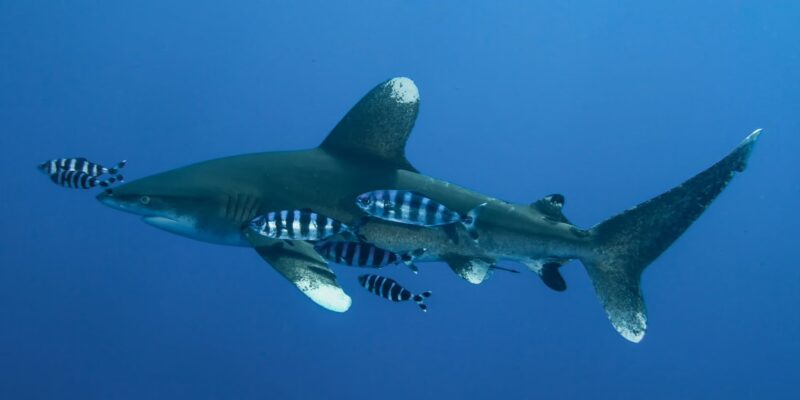
Particularly spectacular are the rare sightings of thresher sharks (Alopias spp.) at the Brothers. These are usually observed between September and February. During this time, the animals often begin their migration to tropical waters, and divers report seeing individual specimens appearing at the Blue Hole or the northern tip. In addition to reef sharks and threshers, tiger sharks (Galeocerdo cuvier) may also patrol the area with some luck. The diver level here should be advanced, as the sites are challenging due to strong currents (both south and north).
The best travel time is from October to January, when the water is cooler and the currents are predominantly southern. During this period, many reef sharks are in the area, offering almost guaranteed sightings. During the months with northern currents, fewer sharks are typically seen. Overall, the Brother Archipelago, with its coral gardens and visibility often reaching 30–40 m, is a dream destination for advanced divers wanting to dive up close with reef sharks.
14. Christmas Island (Australia, Indian Ocean)
Christmas Island (Australia) is a tiny volcanic island about 350 km south of Java. Its nickname, “Galápagos of the Indian Ocean,” reveals that not only is nature pristine on land, but also underwater. The steep walls drop immediately to 500 m depth—and around them, large fish often patrol. The waters are not yet widely known but are particularly famous for the annual encounter with whale sharks (Rhincodon typus).
The season for whale shark encounters lasts from about November to April. During this “wet” season, seagrass and mackerel scad are in the water, attracting whale sharks. Specifically, in Lynch Bay, tours depart to snorkel or dive in the shallow water as soon as a whale shark is sighted. Visibility here is excellent (up to 50 m), and the water is usually 26–28°C warm. Besides whale sharks, divers at Christmas Island often encounter grey reef sharks (C. amblyrhynchos) and whitetip reef sharks (T. obesus). Barracuda schools and rays are also common. Christmas Island is ideal for experienced adventure divers seeking remote locations—and it is expected that more shark species (e.g., tiger sharks) will be reported there in the future.
15. Jardines de la Reina (Cuba)
The Jardines de la Reina (“Gardens of the Queen”) off Cuba’s southern coast are a largely untouched marine national park. It is considered one of the best shark diving spots in the Caribbean. The coral reefs there are extremely healthy and provide food for many predatory fish. Especially Caribbean reef sharks (Carcharhinus perezi) and silky sharks (Carcharhinus falciformis) are numerous and often curious towards divers. Nurse sharks (Ginglymostoma cirratum) and whale sharks also pass through the area, with the latter appearing in the afternoon or evening.
The best months for diving are during the dry season from December to April, when the sea is calm and visibility is at its greatest. The water then cools slightly to about 26–28°C, but dozens of sharks can often be seen during blue-water encounters. During the main season from July to November, there is more plankton but also more rain—nevertheless, many whale sharks swim here during this time (most sightings between July and November). Overall, Jardines de la Reina offers an underwater mix of static coral landscapes and exciting shark activity, ideal for divers of all levels.


