


Nervous shark - Carcharhinus cautus
Body structure, features & anatomy
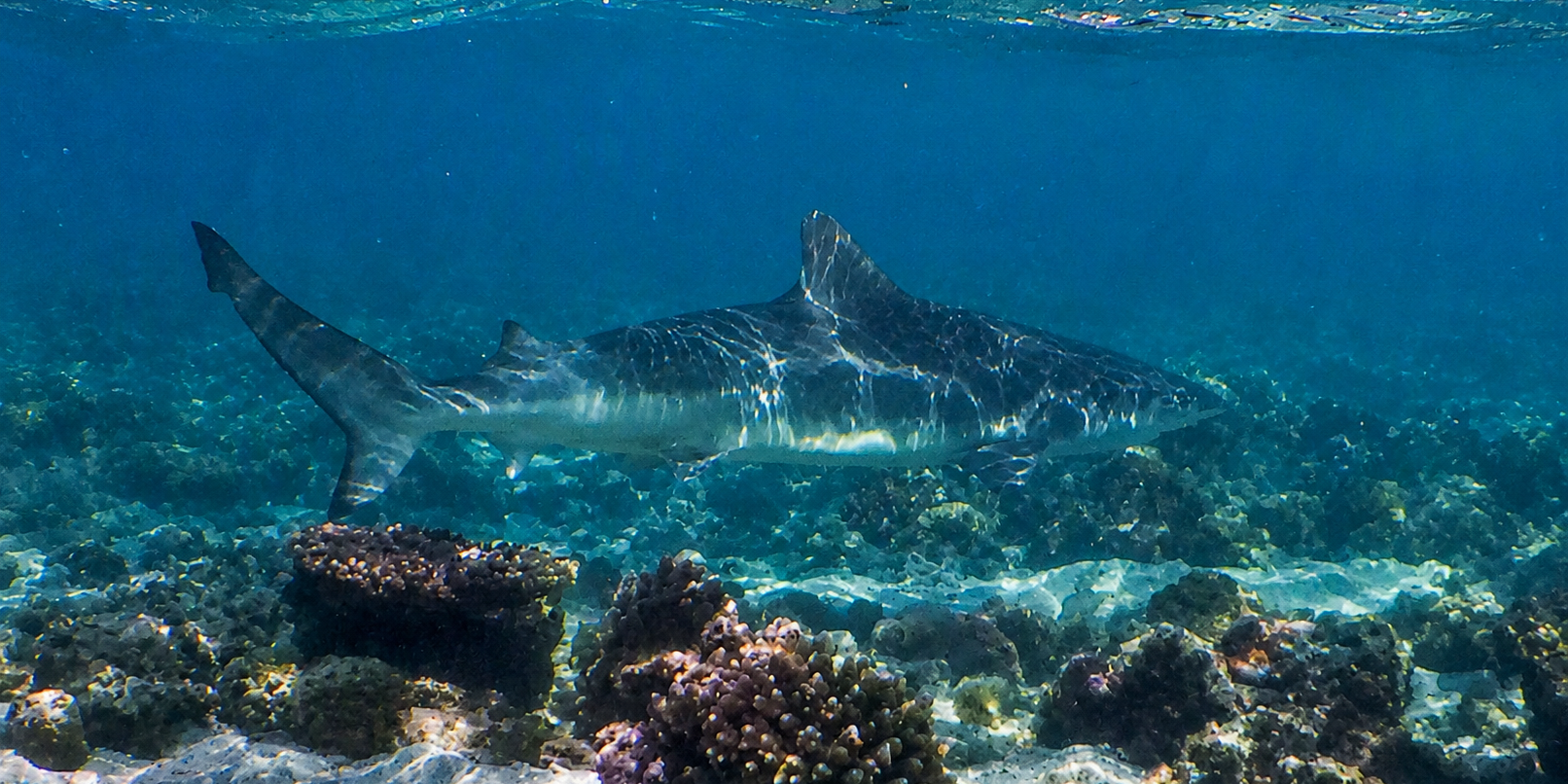
The nervous shark Carcharhinus cautus is a small representative of the requiem sharks. Fishes of Australia describes it as a coastal shark that often occurs between mangroves and states a maximum total length of 150 centimeters.
The body is strong and spindle-shaped, the snout is short and broadly rounded. The eyes are horizontally oval and protected by nictitating membranes. The interdorsal ridge visible in some similar requiem sharks is missing between the two dorsal fins.
Dark fin edges instead of isolated black tips
The species description at Shark-References mentions a gray to light brown upper surface, a white underside and dark edges on the dorsal, pectoral and caudal fins. On the caudal lobes and pectoral fins these edges can be widened to form dark tips; On the first dorsal fin, however, the clearly defined black tip spot is missing.
A prominent light line along the flank may separate the darker upperside from the belly. For a reliable identification, the body shape, fin position and the distribution of the dark edges should be considered together because young Requiem sharks are easily confused with each other from a distance.
Distribution & habitat
FishBase locates the nervous shark in the western Pacific: off northern and western Australia, on the southern coast of New Guinea and near the Solomon Islands. The species lives on continental and insular shelves and usually stays near the coast.
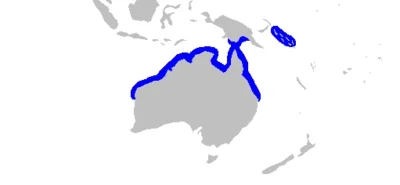
Warm, very shallow bays, reef areas, sandy or muddy bottoms and mangrove-lined coasts are typical. FishBase states the documented depth range is 0 to 20 meters. This means that the habitat overlaps heavily with nurseries of other coastal sharks and with areas used by nets, boat traffic and coastal development.
Close connection to mangroves
A telemetry study in the Mangrove Bay on Ningaloo Reef tracked twelve marked nervous sharks for up to 579 days. For the animals recorded over a longer period of time, the mean core areas were only 0.66 square kilometers and the range areas were 3.64 square kilometers; the animals clearly preferred the mangrove zone.
On average, 81.5 percent of the recorded stay time was in the fishing-free zone there. Individual animals still left the recipient network, so small protected areas do not completely cover every individual. However, the results show how important appropriately placed mangrove protection areas can be against local overfishing.
Video: nervous sharks in the flat Shark Bay Marine Park
Drone video from a remote area of the Shark Bay World Heritage Marine Park shows a group known as nervous sharks in extremely shallow water. Such images make the coastal reference visible, but do not replace close-up or scientific documentation for reliable species identification.
Behaviour, diet & reproduction
The German and English names allude to the shy behavior: If disturbed or suddenly splashed, nervous sharks can quickly flee from very shallow water into deeper areas. They are observed singly, in small groups and occasionally in larger gatherings.
The menu mainly includes small bony fish and bottom crustaceans such as crabs. The short, broad snout and numerous small teeth suit an agile coastal hunter, picking up small prey on and just above the ground.
Placental live birth and slow life cycle
A study from Shark Bay documented matings in late October and early November, an approximately 11-month gestation, and a two-year reproductive cycle. Females became sexually mature at around six years old, males at around four years old.
After the yolk has been consumed, the embryos are nursed via a yolk sac placenta and are born alive. Newborns measure around 35 to 39 centimeters. In Shark Bay, the oldest females examined reached 16 years and the oldest males reached 12 years; At the same time, females became larger than males.
Threats & conservation status
The IUCN Red List lists the nervous shark globally as not endangered (Least Concern). The underlying valuation is from 2019; it does not rule out local declines or regional data gaps.
The Australian Shark Report Card rates the species as sustainable in Australia. nervous sharks ends up as bycatch in coastal gillnets and trawl nets, especially in the north, or is discarded. Fishing mortality there is considered to be acceptable; outside Australia the population status is less well known.
CITES-Appendix II controls international trade
The CITES Guide to Sharks and Rays lists Carcharhinus cautus in Appendix II. The listing has been in effect since 2023 and does not automatically mean that the species is in acute danger of extinction; However, it requires evidence that international trade is legal and not harmful to the population.
Because the species can be closely tied to shallow coastlines, mangroves and small ranges, local populations remain vulnerable to intensive fishing and habitat loss. Protection therefore works best as a combination of controlled fishing, reliable species data and the preservation of contiguous mangrove and shallow water zones.
Nervous shark & humans
The nervous shark is considered shy and largely harmless to humans. Its name describes its willingness to escape rather than a danger to swimmers or divers. However, like any wild shark, it should not be touched, pursued, fed, or circled in a shallow bay.
The Advice from the Florida Museum for Divers recommends staying calm, observing the animal and giving it space if you see a shark. If it approaches repeatedly, the buddy team and the exit should be controlled and approached without hectic movements.
Video: adapted feeding in the aquarium
The Great Barrier Reef Aquarium shows in its video how the feeding method was adapted for its Nervous Whalers. The recordings allow a good view of body shape and swimming style, but show a controlled posture and must not be transferred one-to-one to encounters with wild animals.
The following applies to underwater photography: loosen the distance with the focal length, do not block any direction of escape and avoid bait or contact. Especially in cloudy mangrove water, a slow pace helps so as not to startle the animal and not to stir up sediment unnecessarily.
Profile
- First described:
- Max. size:
- Depth:
- Max. age:
- Max. weight:
- Water type:
- IUCN Status:
Taxonomy
- Kingdom:
- Phylum:
- Subphylum:
- Infraphylum:
- Parvphylum:
- Class:
- Subclass:
- Superorder:
- Order:
- Family:
- Genus:
Newsletter
Shark Alert in Your Inbox