


Epaulette Shark - Hemiscyllium ocellatum
Body structure, features & anatomy
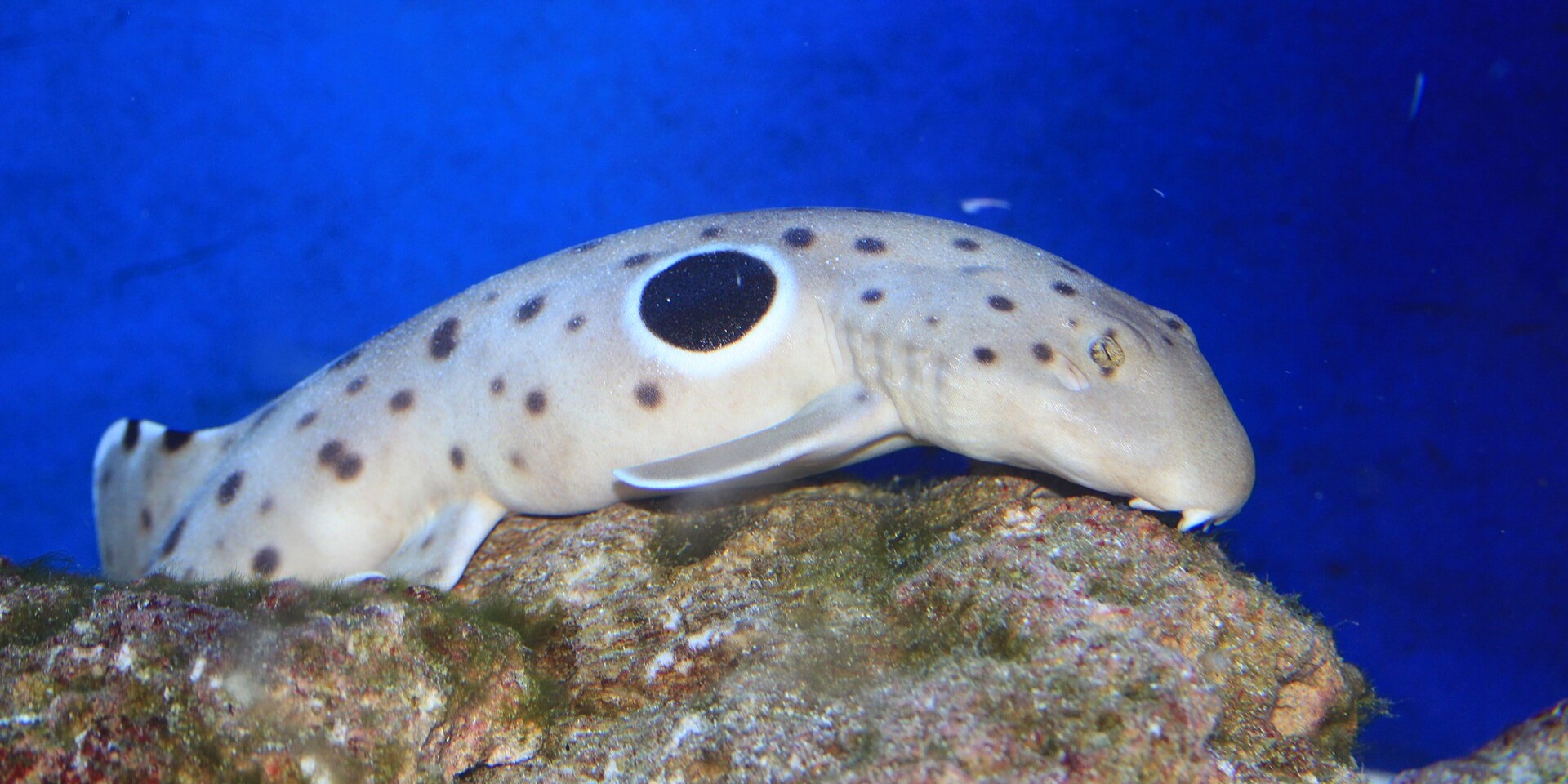
The epaulette shark Hemiscyllium ocellatum is a small member of the Orectolobiformes. It has a slender body, a short head and the bold black eye-like spot behind the pectoral fin that gives the species its common name.
The Australian Museum describes widely spaced dark spots, two similar dorsal fins, an anal fin set just before the tail and short nasal barbels. The shark grows to just over one metre, making it a classic small reef species.
Moving through shallows
Its strong pectoral and pelvic fins are more than resting supports. In very shallow reef areas the shark can push itself over the bottom and move between coral heads, tide pools and reef flats.
Distribution & habitat
The species lives in shallow coastal waters of northern Australia and around Papua New Guinea. On this site the tropical Pacific Ocean context is especially relevant, with strong Australian records from the Great Barrier Reef and northern shelf areas.
Fish.gov.au summarises its habitat as shallow inshore waters and coral reefs to at least 40 metres. Important areas include reef lagoons, tide pools and sheltered coral flats.
Small home ranges
Epaulette sharks are site-attached and use small home ranges. Reef structure, crevices, coral blocks and night-accessible shallows matter more than long migration corridors.
Life history, diet & reproduction
The species is mostly nocturnal and searches reef flats and tide pools for bottom-living prey. It uses smell and electroreception to find worms, crabs, shrimps, amphipods and small fishes.
FishBase lists it as a tropical, reef-associated shark often found in very shallow water and tide pools. Its tolerance of low oxygen is especially well known and fits life in warm, shallow pools at night.
Reproduction
The epaulette shark lays eggs. Females deposit paired egg cases among corals; after several months the young hatch as small, independent bottom-living sharks.
Threats & protection status
Globally, Hemiscyllium ocellatum is listed as Least Concern by the IUCN Red List. No major fishing pressure is identified in Australia, though small aquarium trade collection and occasional bycatch remain relevant.
- Climate stress: shallow reef habitats are sensitive to warming, low oxygen and coral loss.
- Local collection: aquarium trade volumes are small but should remain documented.
- Habitat quality: lagoons and reef flats need clear water, intact coral structure and low disturbance.
Protection across much of the Great Barrier Reef is a major advantage. In parts of the range outside strongly managed areas, local data and habitat management remain important.
Epaulette shark & humans
The epaulette shark is harmless to people. Fishes of Australia describes it as a small slender shark that forages over reef flats and stands out because of its unusual movement.
For divers and snorkellers it is a quiet shallow-water highlight: not a big blue-water predator, but a nocturnal reef animal showing how varied sharks are beyond the famous large species.
Aquariums and photography
The featured photograph comes from Wikimedia Commons and shows an animal at Adventure Aquarium in Camden. In the sea, these sharks should not be touched, chased or moved out of tide pools.
Profile
- First described:
- Max. size:
- Depth:
- Max. age:
- Max. weight:
- Water type:
- IUCN Status:
Taxonomy
- Kingdom:
- Phylum:
- Subphylum:
- Infraphylum:
- Parvphylum:
- Class:
- Subclass:
- Superorder:
- Order:
- Family:
- Genus:
Newsletter
Shark Alert in Your Inbox