


Coral catshark - Atelomycterus marmoratus
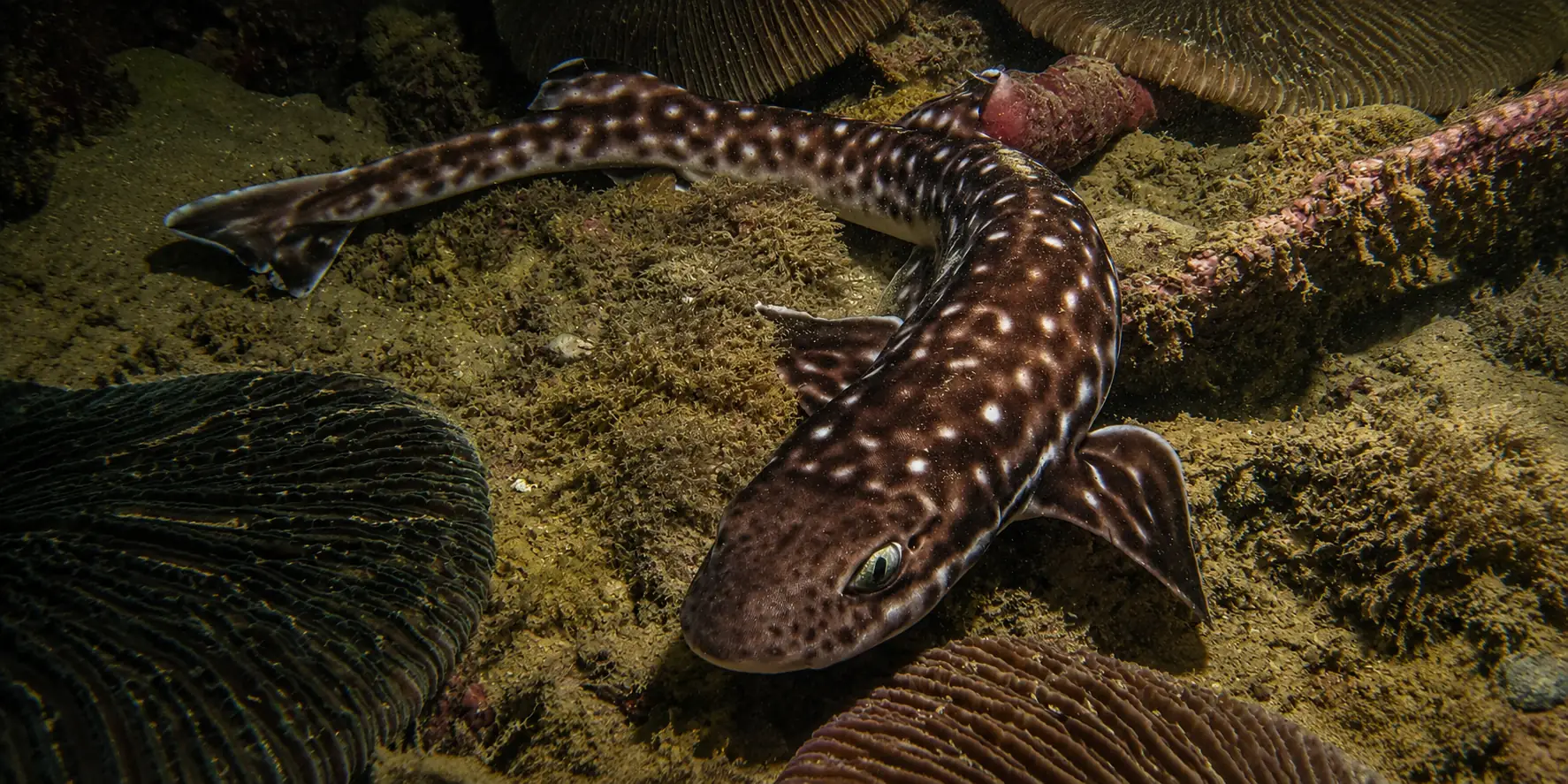
Body structure, features & anatomy
The Coral catshark Atelomycterus marmoratus is a small, slender catshark found on tropical reefs. WoRMS lists the name as accepted; on Haitauchen the species is within Selachii, Galeomorphi, Carcharhiniformes, Scyliorhinidae and the genus Atelomycterus.
Shark-References traces the first description back to Bennett in 1830. The marbled dark spots and saddle spots on a light to brownish background are typical, which look like camouflage in the reef light.
How to recognize the species
According to the references used, the species reaches about 70 centimeters in length. It has a slender body, short barbels on the nose region, two dorsal fins far back on the body and no noticeable fin spines.
The overall picture is crucial for identification: small catshark, shallow reef habitat, marbled pattern and calm behavior on the bottom. This species cannot be confused with larger reef sharks, either ecologically or behaviorally.
Distribution & habitat
FishBase describes Atelomycterus marmoratus, the Coral catshark, as a species of the Indo-West Pacific. On Haitauchen it is with current country references in South and Southeast Asia, New Guinea and the Indian Ocean and Pacific Ocean linked.
The species uses shallow coral and coastal habitats, reef crevices, lagoons, hard substrates and sandy reef areas. The species’ maintained depth range here is 5 to 100 meters.
Depth, structure and local visibility
The habitat is generally accessible to divers, but the species is small, close to the ground and heavily dependent on cover. Good visibility, calm behavior and night or twilight dives are more likely to increase the chance of observations than open water.
A rough distribution map would explain little for this species. The local reef structure is more important: crevices, coral blocks, quiet edge areas and intact small habitats decide whether a Coral catshark becomes visible.
Life history, diet & reproduction
FishBase describes Atelomycterus marmoratus as an inshore, reef-dwelling catshark. The animals often stay on the ground, in crevices or between coral structures.
The diet consists primarily of small bottom-dwelling animals such as invertebrates and small fish. This fits with a slow, searching lifestyle in which camouflage and proximity to the substrate are more important than long hunting distances.
Bottom life instead of open water
The Coral catshark lays eggs. The embryos develop in the egg capsules using yolk reserves until small young animals hatch, which immediately have to cope independently in shallow reef habitats.
Precisely because this species appears small and unspectacular, it is easily overlooked. For a reef ecosystem, it is still part of the nocturnal and ground-level predator community that regulates small animal populations.
Threats & conservation status
IUCN Red List evaluated Atelomycterus marmoratus global as Near Threatened, in accordance with Haitauchen as potentially endangered. The classification reflects regional pressures and uncertainties in many coastal habitats.
Pressure arises primarily from coastal fishing, bycatch, reef degradation and destructive fishing methods. In parts of the distribution area, small sharks are used fresh, dried or processed.
What the classification means
For a small reef-based species, habitat loss can be particularly serious. When coral structures, crevices and quiet peripheral areas disappear, not only area is lost, but also the very protection that these animals need for daytime rest and reproduction.
Protection therefore does not just mean fishing rules. Intact reefs, less destructive coastal use, control of local fisheries and better species recording also determine whether populations remain stable.
Coral catshark & humans
Is for people Atelomycterus marmoratus, the Coral catshark, harmless. Its small size, bottom-hugging lifestyle and hiding behavior make it more of a quiet reef watching experience than a flashy big shark experience.
Divers should not lure such animals out of crevices, do not touch them or harass them with light. Small catsharks in particular often react to stress by withdrawing, and their value lies in natural behavior, not close contact.
Respectful classification
For Haitauchen, this species is a good example of how shark encounters don’t always have to be big and dramatic. A small catshark among corals can tell you just as much about a healthy reef as an encounter with larger species.
Anyone who wants to see Coral catsharke should observe local rules, practice calm observation and avoid contact with the reef. This means the encounter remains equally respectful for the animal, habitat and diver.
Profile
- First described:
- Max. size:
- Depth:
- Max. age:
- Max. weight:
- Water type:
- IUCN Status:
Taxonomy
- Kingdom:
- Phylum:
- Subphylum:
- Infraphylum:
- Parvphylum:
- Class:
- Subclass:
- Superorder:
- Order:
- Family:
- Genus:
Newsletter
Shark Alert in Your Inbox