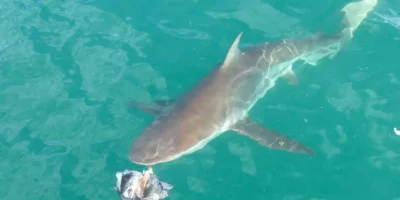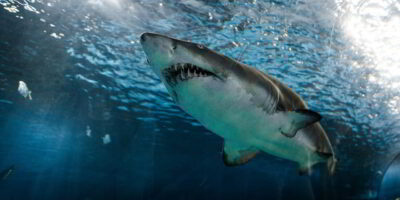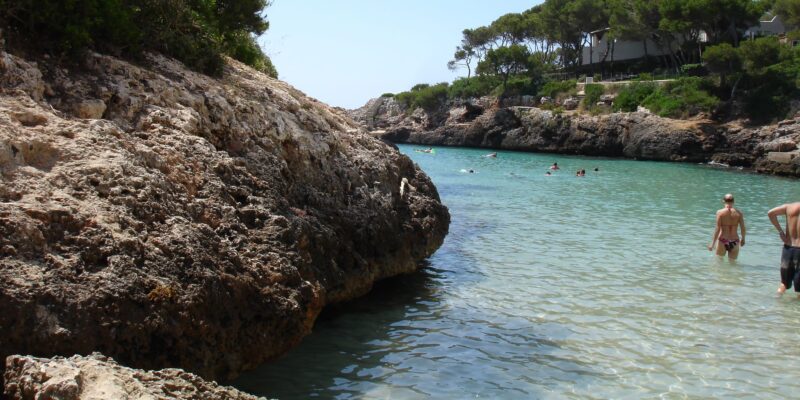
Panic broke out at Playa de Palma on Tuesday when an 85-year-old Italian woman emerged from the sea with a severe leg wound. Lifeguards sounded the shark alarm – but experts are now certain: there was no shark involved. Red flags were raised, police rushed in, paramedics arrived, and tourists were told to clear the water. Initial fears suggested a blue shark attack – a species occasionally seen in the Mediterranean. However, marine biologists quickly cast doubt on the theory. No one actually saw a shark. “It was definitely not a shark,” said marine biologist Aniol Esteban from the Marilles Foundation, dedicated to protecting the Balearic Sea. He suspects a stingray may have injured the woman, or possibly a bluefish or triggerfish. Painful jellyfish stings are also common in the region.
Shark attacks in the Mediterranean? Virtually nonexistent.
According to Esteban, the risk of encountering a shark while swimming off Mallorca is effectively zero. Shark populations in the Spanish Mediterranean have drastically declined, and those that remain avoid the coast. “If you see a shark underwater, go buy a lottery ticket – because that’s less likely than winning the lottery,” Esteban joked.
Other marine creatures pose more risk
Marine injuries still happen – often from jellyfish, venomous fish like weeverfish, stingrays hiding in sand, or moray eels lurking in rock crevices. Tourists were visibly unsettled by the latest incident. Nicole Stahl from Germany is sticking to ankle-deep waters. “It makes you think twice,” said Giulliano Sanfilippo. “You never know what’s out there.” Esteban’s takeaway? “We should worry more about the lack of sharks in the Mediterranean – not about them posing any danger.”