
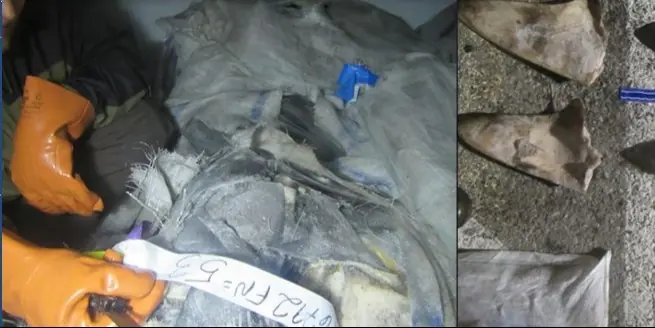
Between 2021 and 2024, nine Japanese fishing vessels landed over 17,000 kilograms of shark fins in 713 sacks at the port of Callao, even though Peru has banned the unloading of detached fins since 2017, regardless of flag or fishing area. According to an analysis of 83 inspection records and transhipment logs, no confiscations were ordered, nor was the Environmental Prosecutor’s Office (FEMA) informed.
What the law requires – and what was missing
By law, “finning” is prohibited; sharks must be landed with fins attached. The regulation applies to both national and foreign vessels, even if the catch was made on the high seas. Normally, inspectors must monitor unloading, report violations, confiscate goods, and impose fines. In the documented cases, this did not happen; no proceedings were initiated, nor was the prosecutor’s office notified.
“Shark fins have a higher market value than the meat. That’s why Peru bans the unloading of detached fins,” emphasise legal experts.
Scope, species and origin
At least 9,000 kilograms of the fins came from the Blue Shark (Prionace glauca, globally “Near Threatened”), with another 8,000 kilograms not species-specifically recorded in the documents. Satellite data suggest fishing activities in international waters of the Pacific. For Peru’s legal framework, this is irrelevant: unloading is only tolerated with fins attached.
Private actors with history
The Japanese vessels were represented by the maritime agency Gyoren del Perú SAC, which has already been fined over $1,000 (including for suspected illegal fishing). The sole buyer of all fins was Servicios Marítimos Santa Elena SAC, a company with a history of violations, including a sanction (2020) for imports of Shortfin Makos (Isurus oxyrinchus) without CITES export permits.
Enforcement gaps and international dimension
CITES secretariat reviews in 2024 led to trade restrictions for certain shark and ray species from Ecuador; for Peru, recommendations included strengthening controls and inter-agency coordination. Experts are calling for stricter measures in Peru: more staff for environmental police and customs, consistent confiscations, meaningful penalties including temporary export bans for non-compliant companies, and the removal of shark products from the customs “green channel”.
“Laws are of little use if controls are lacking. Consistent confiscations and mandatory reporting to the prosecutor’s office are crucial,” warn environmental prosecutors.
Why it matters
The global fin trade creates strong incentives for illegal practices. Detached fins typically mean bodies are discarded at sea, often while still alive. Strict fin-attached requirements are therefore a key tool against finning. The Callao case shows: without effective control, protection remains on paper.


