The Sharks International 2026 brought together more than 800 researchers, conservation experts and policy makers in Colombo from May 4th to 8th. According to the Cayman Islands Environment Agency, 81 countries were represented. Among the participants were Dr. Johanna Kohler and Anne Veeder from the Shark Research & Conservation Programme of the Cayman Islands Department of Environment.
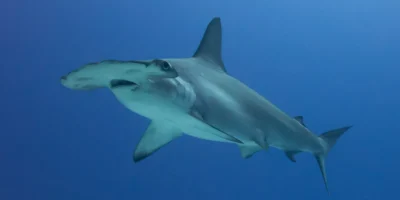
The Environmental Agency of the Cayman Islands reports that its team contributed two presentations of its own. The focus was on new observations of deep-sea sharks, the repeated return of a school of scalloped hammerheads and a citizen research program for long-term monitoring of sharks around the archipelago.
The largest international conference for sharks and rays
Sharks International only takes place every four years. The five-day 2026 edition was hosted in Sri Lanka’s capital Colombo and was dedicated to sharks, rays and chimeras. Discussions included overfishing, the international trade in shark meat, new technologies for research and conservation, and solutions developed together with local communities.
The size of the meeting makes the conference an important place for exchange between research, fisheries management and politics. However, it is not a decision-making conference of states. The work presented there can initiate new cooperation and protection approaches, but does not automatically lead to binding fishing or trading rules.
Deep-sea sharks and returning hammerhead sharks
Johanna Kohler presented current results from the Cayman Islands research program in her lecture on deep sea discoveries. The Environment Agency names two main areas of focus: new evidence of deep-sea sharks and the return of a group of scalloped hammerheads. Around 300 people are said to have followed the lecture on site.
Repeated observations are more important for classifying hammerhead shark occurrences than a single sighting. They can provide clues as to whether animals use an area regularly. However, the brief communication from the Environment Agency does not reveal how long the return was documented or how many animals were observed. The underlying research data is therefore crucial for reliable conclusions.
Sharklogger connects volunteers and long-term data
Anne Veeder presented the Sharklogger Network. The citizen research program involves volunteer participants in long-term shark surveys. Such networks can collect observations over time periods and areas that a small research team alone could hardly cover completely.
According to the Environment Agency, long-term monitoring, together with the special conditions during the local COVID-19 rules, was used to investigate human impacts on the Cayman Islands’ shark populations. Phases with significant changes in the use of the sea can open up comparison opportunities. However, it is not possible to determine how large a measured effect was from the official report alone.
New methods and unusual research questions
Kohler and Veeder also participated in four specialized workshops. This included training on shark research methods and technologies. Another workshop looked at sharks and rays as habitats for other organisms and focused on parasites as components of marine ecosystems.
This perspective broadens the view of sharks: They are not just predators or endangered species, but also support communities and ecological relationships. The exchange of methods is particularly relevant for research in the Cayman Islands because deep-sea species, migratory hammerhead sharks and observational data from the population each require different tools and quality controls.
Visibility is not yet scientific proof
The announcement from the Environment Agency shows which topics the Cayman team has brought forward at the international level. However, it is a review of the authority involved and not a peer-reviewed specialist publication. Important information about methods, sample sizes and statistical uncertainty is missing from this format. The two published lecture videos at least provide a more detailed insight.
The decisive factor will be whether the observations presented result in permanently accessible data, specialist articles and concrete protective measures. For a small archipelago, the combination of local citizen research and international expert exchange can still be particularly valuable: volunteers provide long-term observations, while the global research community contributes methods and comparative data.
Research with local and international support
According to the Environment Agency, the shark research program is supported by grants from Cayman Islands Brewery from the sale of White Tip Lager and by the British funding program Darwin Plus. The project thus combines local financing with international research funding.
The appearance in Colombo shows above all how local observation programs are becoming part of a larger protection debate. Whether it’s about rare deep-sea sharks, recurring groups of hammerhead sharks or the influence of human activity: only long-term, comparable data turn individual observations into a basis for effective protection.