


Shovelbill shark - Sphyrna alleni
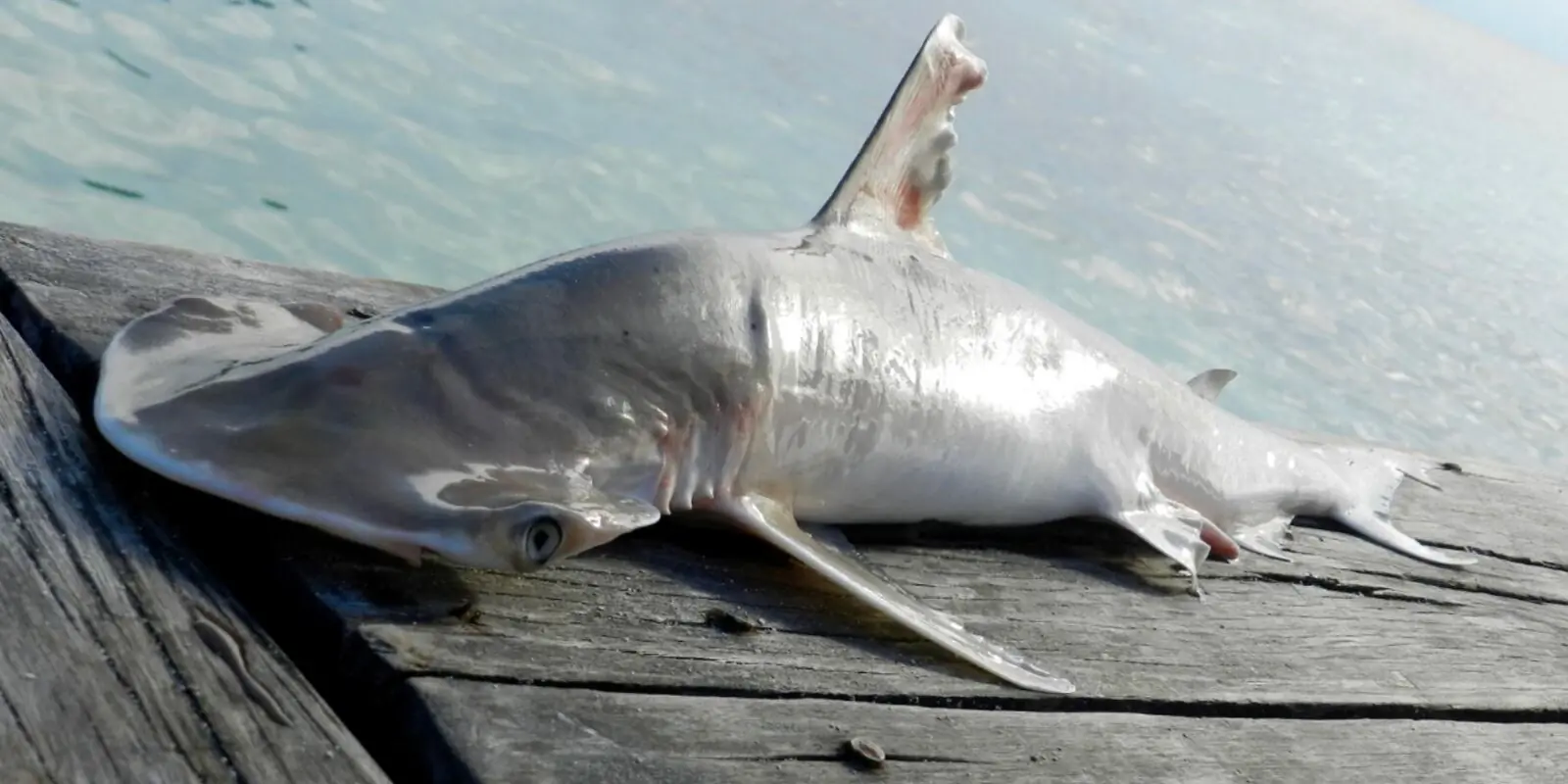
Body structure, features & anatomy
The shovelbill shark Sphyrna alleni is a small hammerhead in the bonnethead complex. WoRMS treats the name as accepted; on Haitauchen it is placed in Selachii, Galeomorphi, Carcharhiniformes, Sphyrnidae and the genus Sphyrna.
Shark-References summarizes the original diagnosis as a small hammerhead with a flat, shovel-shaped head. The front edge of the cephalofoil lacks indentations and is more pointed or triangular in both sexes; males can show a pronounced bulge on the anterior margin.
Body structure, features & anatomy
The description in Zootaxa separates Sphyrna alleni from the western Atlantic Sphyrna tiburo. Useful characters include lobule-shaped posterior head margins, molariform rear teeth and higher precaudal vertebral counts.
The species name honors Paul G. Allen. For Haitauchen, the key point is that this is not an extinct placeholder, but a newly named valid species whose public data are still much thinner than for long-known hammerheads.
Distribution & habitat
Catalog of Fishes gives the range as the western Atlantic from Belize and the Caribbean Sea to Brazil. FishBase also mentions Panama, Colombia, and Trinidad and Tobago, and notes a possible contact zone with Sphyrna tiburo between Mexico and Belize.
On Haitauchen the species is linked to Atlantic Ocean and Caribbean Sea and to Belize, Honduras, Nicaragua, Costa Rica, Panama, Colombia, Venezuela, Trinidad and Tobago, Guyana, Suriname, French Guiana and Brazil. Those country terms represent the coastal chain implied by the Belize-to-Brazil range in the western Atlantic.
Distribution & habitat
The species lives close to shore in marine and brackish water. Typical habitats include estuaries, coral reefs, seagrass beds, sandy bottoms and other shallow coastal habitats; offshore blue-water sites are not its core setting.
No dedicated range map is embedded here. Because Sphyrna alleni was separated only in 2024, older maps and catch records can still mix several bonnethead-like species.
Life history, diet & reproduction
Shark-References describes the habitat of Sphyrna alleni as marine shallow water. Sightings are most plausible in sheltered coastal zones, river mouths, seagrass areas, sand flats and shallow reef habitats.
The paper stored in the NOAA Repository repository treats the species as part of a bonnethead complex that was often grouped under Sphyrna tiburo. Many older life-history records therefore cannot be assigned cleanly to one species.
Life history, diet & reproduction
Diet is not yet broadly documented for the new species. Body form, teeth and habitat suggest bottom-oriented feeding on small fishes, crustaceans, mollusks and other coastal prey, but exact regional data remain a research gap.
Like other hammerheads, the species gives birth to live young. Species-specific data for gestation, litter size, age and regional population structure are still far less available than for larger, longer-studied hammerheads.
Threats & conservation status
FishBase lists the IUCN status of Sphyrna alleni in version 2025-2 as Not Evaluated. On Haitauchen the species is therefore treated as not evaluated, not as extinct.
The Zootaxa description shows that this is a newly delimited species from heavily used coastal waters. Small coastal sharks can be affected by gillnets, trawls, local fisheries and habitat loss in estuaries.
Threats & conservation status
Catalog of Fishes confirms the valid name and western Atlantic range. Accurate species separation matters because older bonnethead data may combine catches, declines and distribution records from several species.
The practical conservation approach is cautious: document sightings, report catches to species level, protect estuaries and seagrass beds, and avoid hiding the species inside broad bonnethead statistics.
Shovelbill shark & humans
FishBase treats Sphyrna alleni as harmless to humans. That fits the small size and coastal, bottom-associated habits of the shovelbill shark.
Shark-References gives a size of more than 1150 mm and describes the flat, shovel-shaped head. Encounters in the water should be calm and side-on, with a clear escape route for the shark.
Shovelbill shark & humans
Do not touch, feed, chase, corner or lift the shark from the water for photos. In shallow estuaries, mangroves and seagrass beds, passive observation is especially important because these areas can shelter young sharks and small fishes.
Good photographs with place, date and habitat notes are useful. They help make the newly named species more visible in public data and reduce confusion with the classic bonnethead.
Profile
- First described:
- Max. size:
- Depth:
- Max. age:
- Max. weight:
- Water type:
- IUCN Status:
Taxonomy
- Kingdom:
- Phylum:
- Subphylum:
- Infraphylum:
- Parvphylum:
- Class:
- Subclass:
- Superorder:
- Order:
- Family:
- Genus:
Newsletter
Shark Alert in Your Inbox