


Shortnose spurdog - Squalus megalops
Body structure, features & anatomy
The shortnose spurdog Squalus megalops is a small dogfish in the family Squalidae. WoRMS treats the name as valid; on Haitauchen it is placed within Selachii, Squalomorphi, Squaliformes and the genus Squalus.
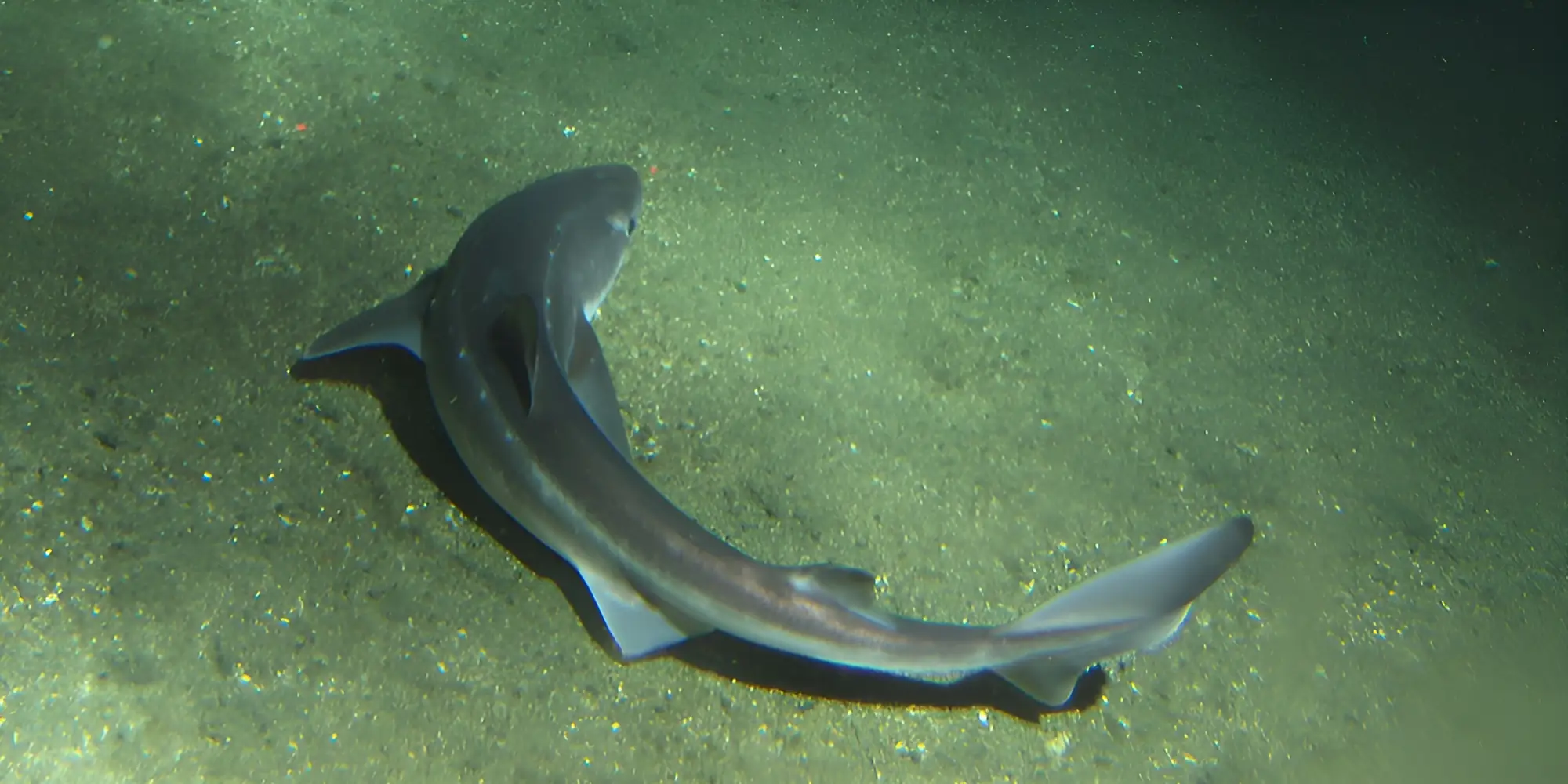
FishBase describes an elongated bronze-grey to grey shark with a pale underside, a short angular head, a small mouth and two dorsal-fin spines. Like other dogfishes, it has no anal fin.
Short snout and understated markings
The name points to the body shape: the snout is short rather than drawn out, the mouth looks broad in relation to the snout, and the body lacks the striking pale spots that help identify some other dogfishes.
Identification should stay careful. Several members of the Squalus megalops group look similar, and older records from widely separated regions may reflect different species concepts. Region, source date and specimen identity matter together.
Distribution & habitat
The range of the shortnose spurdog should be read as broad but taxonomically cautious. FishBase country records now connect the species with existing Haitauchen country terms from parts of Africa, Asia, Oceania and South America.
Fishes of Australia gives a detailed Australian account, including tropical to temperate waters around Australia. The FishBase country list adds further national records, but those records are not the same as a simple continuous range map.
Shelf and upper slope
Shark-References emphasizes the difficult species complex: dogfishes called Squalus megalops in the literature need regional comparison. That is why this page does not use a broad range map.
The habitat is mainly on outer shelves and upper continental slopes, over sand, mud and mixed bottom. Depth records run from shallow water to several hundred metres, but normal recreational dives are not the usual setting for this species.
Life history, diet & reproduction
Shortnose spurdogs live close to the seabed and may gather where shelf and slope habitats suit them. They are not open-water cruising sharks, but small predators using bottom structure and low relief.
Their prey includes bony fishes, shrimps and other crustaceans, cephalopods and smaller cartilaginous fishes. The broad diet fits a flexible hunter of small animals on or just above the seafloor.
Slow life history
fish.gov.au Shark Report summarizes a slow life history in Australia, with late maturity, slow growth, small litters and maximum ages reported around 15 years for males and 32 years for females.
The species is live-bearing without a placenta. Long gestation and few young mean that local removals can matter even when a species is not globally classified as threatened.
Threats & conservation status
IUCN Red List lists Squalus megalops globally as Least Concern. That category reflects the available data and current taxonomy; it should not be read as immunity from local pressure.
The main pressure is bycatch or retained secondary catch in bottom fisheries. Trawls, gillnets, longlines and related gears can overlap with outer shelves and upper slopes where dogfishes occur.
Why small dogfishes still need attention
Small dogfishes can still be sensitive because they mature slowly, produce small litters and may separate by size or sex. Taxonomic confusion also makes clean catch and trend data harder.
Useful protection starts with accurate identification, species-level catch records, careful release and regional monitoring. For a species complex, grouping all similar dogfishes under one name can hide real changes.
Shortnose spurdog & humans
For people, the shortnose spurdog is harmless. It is small, bottom-associated and usually deeper than the classic reef or beach shark encounter.
Divers who see one should keep distance, avoid chasing it with lights or cameras and never handle it. The dorsal-fin spines are real spines and are also important protection for the shark.
Encounters while diving
Sightings are useful when they include depth, place, time, photographs and behaviour notes. In fishery or bait situations, the best response is passive observation and no handling of captured animals.
For Haitauchen, this species represents the less visible shelf and deep-water fauna. It is not a spectacle species, but it shows why small dogfishes deserve careful records and precise identification.
Profile
- First described:
- Max. size:
- Depth:
- Max. age:
- Max. weight:
- Water type:
- IUCN Status:
Taxonomy
- Kingdom:
- Phylum:
- Subphylum:
- Infraphylum:
- Parvphylum:
- Class:
- Subclass:
- Superorder:
- Order:
- Family:
- Genus:
Newsletter
Shark Alert in Your Inbox